

*This post may contain affiliate links for which I earn commissions.*
If you’re just starting out as a contractor — whether in electrical, plumbing, or HVAC — pricing your work can feel like walking a tightrope. Charge too much, and you fear losing the job. Charge too little, and you end up working for pennies. Most new contractors lean toward the latter because they’re eager to build a client base and stay busy.
I’ve been there. Early in my career, I underbid jobs just to “get the work.” I thought being the cheapest meant staying competitive. But what it really did was burn me out, drain my bank account, and make me resent the work I used to love.
This post is about helping you find that balance — how to price your work fairly and profitably, without undervaluing your time, skill, and experience. By the end, you’ll have a practical way to calculate your prices, communicate your value, and build a sustainable business that rewards your effort.
Stop Thinking Like an Employee — You’re a Business Now
When you first go out on your own, it’s easy to price work based on what you used to make as an hourly employee. But that hourly rate doesn’t cover everything that comes with running your own business — overhead, taxes, insurance, tools, and downtime.
As an employee, someone else paid for the truck, the fuel, the advertising, and the paperwork. Now, that’s all on you.
Here’s the mindset shift:
You’re not charging for your time — you’re charging for the value and risk you bring to every job.
Example:
Let’s say you used to make $35/hour working for someone else. If you charge that same rate now, you’ll lose money. Once you factor in business costs, your real hourly rate might need to be closer to $65–$85/hour just to stay profitable.
Pro Tip:
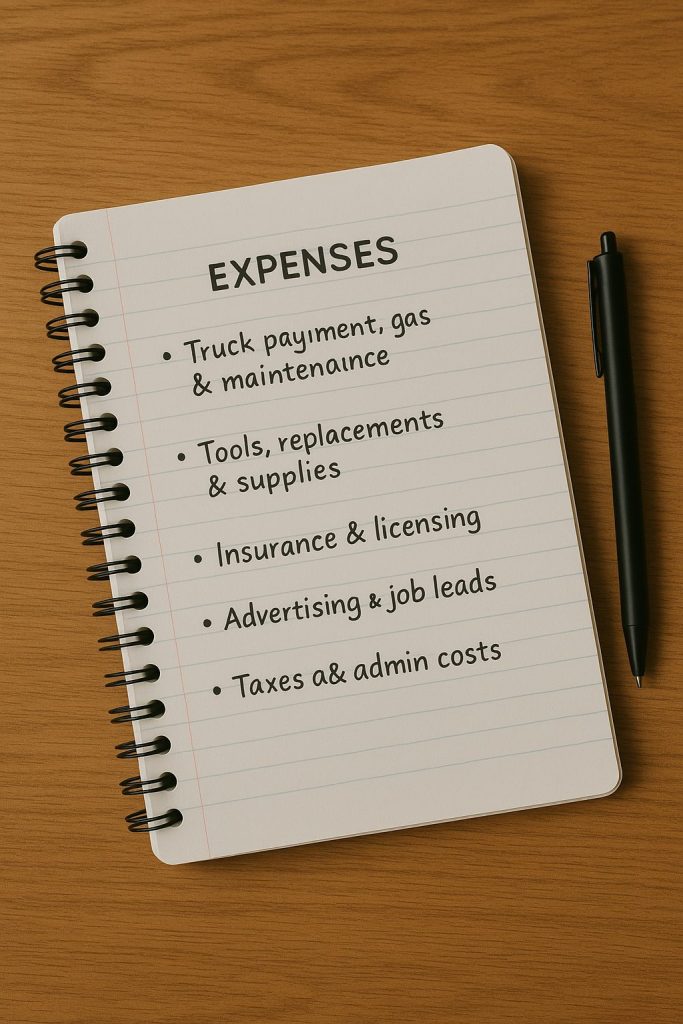
Sit down and write out every recurring cost you have to operate:
- Truck payment, gas, and maintenance
- Tools, replacements, and supplies
- Insurance and licensing
- Advertising and job leads
- Taxes and admin costs
Add them all up. Those numbers are your real costs, and they should guide your pricing from now on.
Know the Difference Between Busy and Profitable
Many contractors stay “busy” but barely make ends meet. The problem isn’t lack of work — it’s lack of pricing strategy.
It’s easy to chase volume, but if you’re working 60 hours a week for minimum profit, you’re running on fumes. Profit isn’t greed — it’s what keeps your business alive.
Here’s a simple rule of thumb:
If you can’t pay yourself, cover your costs, and set aside a profit margin — you’re not charging enough.
Example from the field:
A local HVAC tech I mentored was charging $75/hour because it “sounded fair.” After we did the math, his actual profit after taxes and expenses was less than $10/hour. Once he raised his rates to $95 and communicated the value he delivered, clients didn’t flinch — and he finally had breathing room to grow.
What to Track:
- Gross revenue (what you bill)
- Net profit (what’s left after expenses)
- Effective hourly rate (what you actually earn after costs)
Use QuickBooks, Jobber, or even a spreadsheet to track each job’s real profitability. Numbers don’t lie — and they’ll tell you when it’s time to raise rates.

Price With Confidence — and Communicate Your Value
Most customers don’t choose the lowest bid. They choose the contractor who sounds confident, trustworthy, and professional. That starts with how you present your price.
When you act hesitantly or discount too quickly, you signal that you don’t believe in your own worth. Confidence — backed by skill and reliability — earns respect.
How to Present Your Price Professionally:
- Provide a detailed estimate with a clear scope of work.
- Explain what’s included and why quality matters.
- Don’t apologize for your price — explain the value behind it.
Example Script:
“My estimate covers high-quality materials, licensed work, full cleanup, and a one-year warranty. I don’t cut corners — that’s why my clients call me back year after year.”
It’s not about being the cheapest. It’s about being the most reliable — and reliability has a price.
Create a Simple Pricing System That Works
If you’ve ever felt like you’re “guessing” what to charge, you’re not alone. But you can fix that with a consistent pricing framework.
Here’s a simple formula to get you started:
Labor + Materials + Overhead + Profit = Total Price
Break it down like this:
- Labor: What your time is worth (including setup, drive time, and cleanup).
- Materials: The actual cost of parts or supplies — include markup to cover handling and storage.
- Overhead: Add 10–20% to cover insurance, fuel, software, phone, and admin.
- Profit: Add another 10–20% for growth, upgrades, and rainy days.
Example:
Let’s say you’re installing a ceiling fan:
- Labor (2 hrs @ $75/hr): $150
- Materials (fan + hardware): $200
- Overhead (15%): $52.50
- Profit (15%): $52.50
Total: $455
Round it to a clean, professional number — say $450. That’s your price.
Pro Tip:
Use estimating software like Jobber, Houzz Pro, or ServiceTitan to build quotes fast and consistently. These tools let you save templates and automatically calculate markup.
Practical Steps: The Fair Pricing Checklist
Use this checklist to make sure you’re not shortchanging yourself:
- Know Your Costs: List every recurring expense in your business.
- Set a Base Hourly Rate: Include labor, overhead, and profit.
- Price by Value, Not Fear: If you deliver professional results, charge accordingly.
- Present Estimates Confidently: Never apologize for charging what you’re worth.
- Review Regularly: Reassess your pricing every 6–12 months to account for inflation, insurance, or new expenses.
Remember, good clients respect good work — and they expect to pay for it.
Pricing your work isn’t about luck or guesswork — it’s about knowing your value and building a business that rewards your effort.
When you charge fairly and confidently, you attract better clients, deliver higher-quality work, and build a reputation that lasts. You’ll stop chasing low-paying jobs and start choosing the right ones — the kind that let you grow instead of grind.
Never forget: You’re not just a tradesman. You’re a business owner.
And your work — and your worth — should reflect that.
If you found this helpful, check out my related post:
“Avoiding the Rookie Trap: 5 Mistakes Every New Contractor Makes (and How to Fix Them).”