
*This post may contain affiliate links for which I earn commissions.*
If you’ve ever walked through a supply house or scrolled online and felt that tug to grab the newest gadget, you’re not alone. Every contractor has been tempted by a shiny new tool that promises to make life easier. Some tools really do change the way you work. Others just take up space in the truck and quietly drain your profit.
Many newer contractors assume that more tools equal better service, faster work, or higher pay. It sounds right, but it is not always true. The wrong purchase at the wrong time eats cash, delays your growth, and adds stress you do not need.
This post will help you sort out which tools are real business assets and which ones are distractions. By the time you finish reading, you will have a simple rule you can use before every purchase so you can grow your trade business with confidence instead of guesswork.
The Money-Maker Test: Does This Tool Actually Earn?
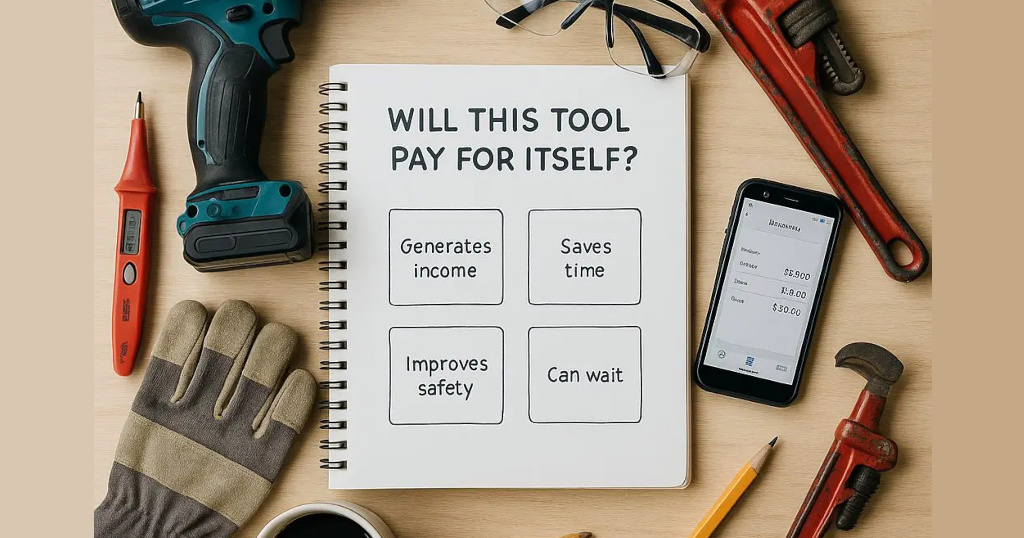
A tool earns money when it helps you finish work faster, say yes to more profitable jobs, or provide a level of quality that clients value enough to pay for. That might sound obvious, but in the heat of the moment, it is easy to justify a purchase because it is cool, convenient, or because other contractors are talking about it.
When you see a new tool, pause and ask a question: How does this tool increase my capacity or reduce my costs? If the answer is fuzzy, the tool might not be a good investment yet.
Here are examples that usually pass the money-maker test:
- A drain camera that helps a plumber diagnose issues fast and upsell the right repair.
- A time-saving cordless crimper that cuts minutes off every termination.
- A vacuum system that allows an HVAC tech to pull deeper vacuums in less time.
Each of these tools opens the door to faster job completion, fewer callbacks, or better quality. That affects your bottom line in a real way.
Tools that fail the test often do one thing: they make your day feel easier without changing the economics of the job. If a tool saves you thirty seconds but costs a week’s profit, you are buying comfort, not return.
Beware the Tool Drawer of Good Intentions
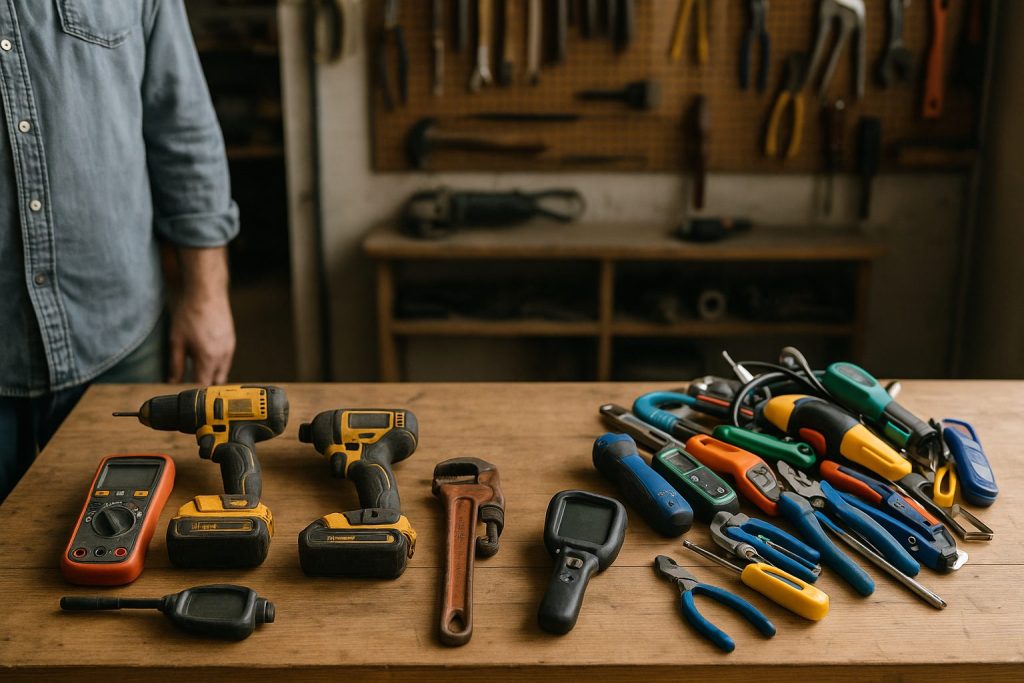
Most experienced contractors have a drawer, bucket, or corner of the shop filled with tools that were bought with good intentions and used once. The pattern usually looks like this:
You see a tool everyone is raving about, think it will make you more professional, and buy it. Then you discover it only matters on jobs you rarely take or require more setup time than the work itself. So it sits.
This is not about judgment. It is about recognizing a common pitfall so you do not repeat it. A busy trade business cannot afford pricey decorations. Every purchase should support your ability to win jobs, complete work, or train your team.
A helpful way to think about temptation tools:
- If you need to talk yourself into the purchase, you probably do not need it.
- If you can clearly picture three upcoming jobs where the tool saves hours, now you are thinking like a business owner.
- If a tool saves effort but not time, be careful. Your body will appreciate it, but your business will not feel the impact unless the tool meaningfully changes your speed or quality.
New contractors sometimes confuse comfort purchases with business purchases. Comfort tools have value, but they belong later, when cash flow is steady, and your pipeline is full.
Time vs. Money: The Real Math Behind Smart Tool Buying
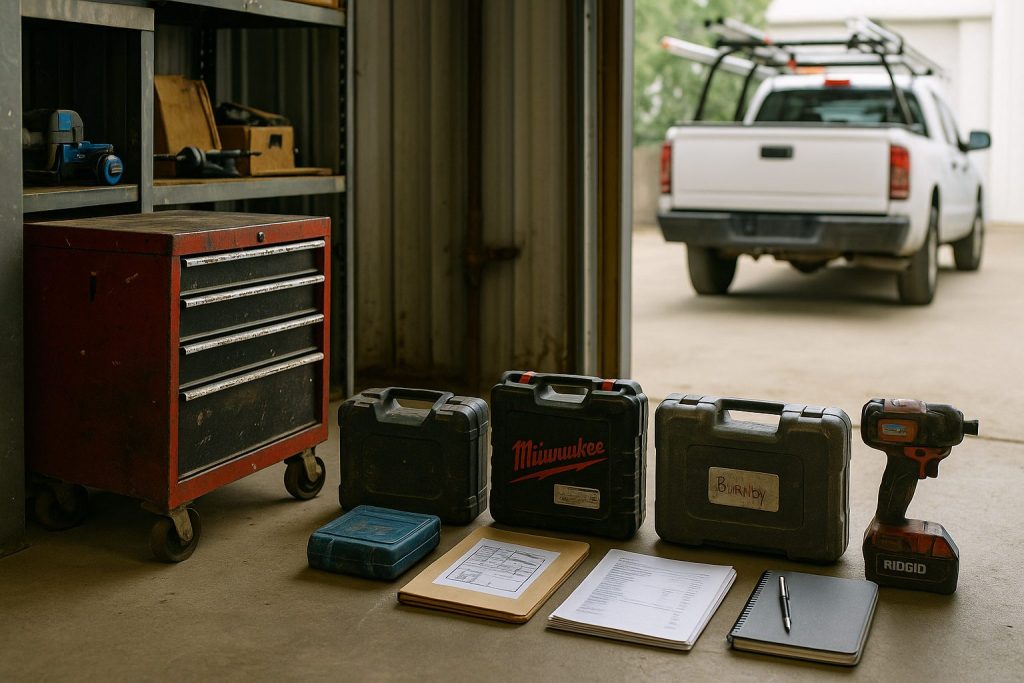
Most contractors figure that if a tool saves time, it must make money. That is not always true. Time savings become profit only when they translate into either more completed jobs or reduced labor costs.
Picture a small electrical business with one or two techs. A new tool that saves ten minutes on each service call matters only if:
- You do enough calls per week for the time savings to add up.
- You can use those saved minutes to take on an additional paying job.
- It reduces stress or fatigue in a way that helps the quality of the work.
Here’s a simple example from daily trade life. A contractor is thinking about buying a specialized bending tool. It promises perfect bends but takes longer to set up. If the majority of jobs do not require those bends, the tool may slow the crew down instead of helping them.
On the other hand, a well-chosen piece of tech, like estimating software or a job tracking app, may save hours of admin time every week. That is time you can actually turn into revenue by bidding more jobs, following up faster, or managing your team more efficiently.
The best investments often are the ones that help you run the business, not just the field work.
A Simple Rule You Can Use: The Three Job Test
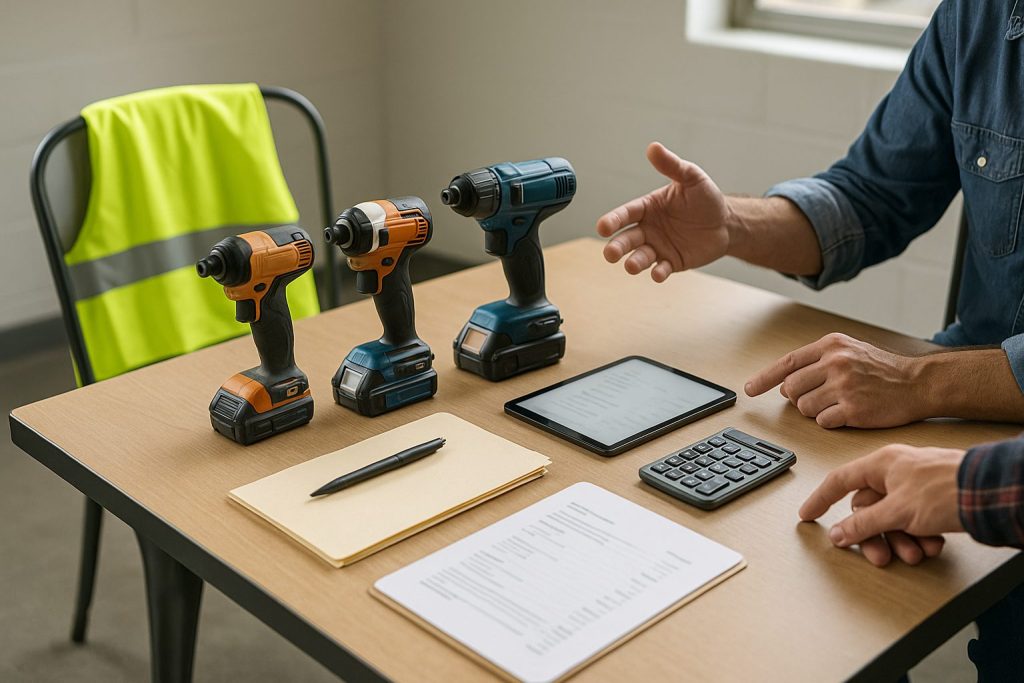
Here is a practical framework you can start using right away. Before buying any tool over fifty dollars, ask yourself these three questions:
- Do I have three upcoming jobs where this tool will save at least twenty minutes each?
If yes, the tool has a measurable impact instead of a theoretical one. - Will it help me complete higher-quality work that reduces callbacks or increases referrals?
If a tool helps deliver cleaner, more consistent results, that is worth noting. - Does it allow me to take on jobs I currently turn down?
This is where many contractors unlock real revenue. A new drain machine, camera, or diagnostic tool can open doors to profitable work you were not equipped to handle.
If a tool does not pass at least one of these tests, wait. It is better to use equipment that pays for itself quickly than to collect tools that impress no one and increase overhead.
Helpful Tools and Tech That Often Pay Off
Every contractor and every market is different, but some tools consistently improve profitability for growing trade businesses. These include:
- Estimating software that produces fast, accurate bids.
- Invoicing apps that reduce admin time and help cash flow.
- AI tools for writing job descriptions, following up with clients, or creating simple systems.
- Project management software that helps you schedule jobs, track materials, and communicate with your team.
These tools rarely sit on the shelf. They support the whole business and pay for themselves quickly because they reduce mistakes, improve organization, and save time that can be reinvested into revenue-generating work.
No pressure to buy any specific brand. It is simply worth noting that technology often brings a better return than specialty tools that get used once in a blue moon.
Conclusion
Contractors do not fail because they lack tools. They fail because they choose the wrong ones at the wrong time. When you start thinking of tools as investments instead of toys, your business begins to grow with intention.
Use the three-job test. Look for tools that truly save time, increase quality, or open the door to more profitable work. Everything else can wait until the business is stronger and the cash flow can support comfort purchases.