
*This post may contain affiliate links for which I earn commissions.*
Every contractor has that moment — standing on a job site, frustrated by how the company runs things, thinking, “I could do this better on my own.” I get it. I’ve been there. The dream of running your own trade business — whether it’s electrical, plumbing, or HVAC — is exciting. You get to call the shots, choose the clients, and finally do things your way.
But here’s what most guys don’t realize at first: going out on your own isn’t just about having the skills. It’s about understanding the real costs — not just the money, but the time, energy, and responsibility that come with building something that lasts.
In this post, I’ll walk you through the true costs of starting your own trade business — from tools and trucks to insurance and mindset. By the end, you’ll know exactly what you’re getting into (and how to set yourself up for success without going broke or burning out).
The Financial Reality No One Talks About
Let’s start with the obvious — money.
You can’t build a solid business on wishful thinking and a few side jobs. Before you hang your own shingle, you need to know what you’re really signing up for.
Here’s a rough breakdown of what most new contractors face:
- Licensing and business setup: $500–$2,000 (varies by state)
Business registration, local permits, and sometimes a contractor’s license exam. - Insurance: $1,000–$3,000 annually
Liability insurance is non-negotiable. One accident could wipe you out without it. - Tools and equipment: $5,000–$15,000
Even if you already have tools, running your own jobs requires more — ladders, testers, specialty tools, maybe even a trailer. - Vehicle: $10,000–$30,000
Whether you buy used or new, your truck becomes your rolling office. Don’t skimp on maintenance. - Marketing and branding: $500–$2,500
You’ll need business cards, a simple website, and some basic advertising or listing fees.
And don’t forget working capital — at least 2–3 months of expenses in the bank. Jobs don’t always pay on time, and suppliers want their money up front.
Pro Tip:
Start small and scale. I began with one van, a few clients, and a plan to reinvest profits. You don’t need a fleet or fancy logo — you need reliable work and a reputation for doing it right.

The Time and Energy Cost of Being “The Boss”
When you go out on your own, you stop being “just” a tradesman. Overnight, you become:
- The estimator
- The scheduler
- The accountant
- The customer service rep
- And yes, still the guy pulling wire or fixing leaks
Owning a construction trade business means long hours, especially in the beginning. You’ll quote jobs after dinner, chase invoices on weekends, and sometimes work 60+ hours a week just to keep up.
Here’s the hard truth: you’ll trade your boss for a different kind of pressure — responsibility.
But the reward? Freedom. The kind that comes from knowing every hour you put in builds your name, your reputation, and your future.
Example:
I once spent my evenings doing takeoffs at the kitchen table while my kids did homework beside me. It wasn’t easy, but those nights built the foundation for a business that later supported my whole family — and a few other families, too.
The Hidden Costs of Doing It Right
There’s the startup cost… and then there’s the stay-in-business cost.
Too many new contractors forget that reputation, reliability, and compliance come with their own price tag:
- Training & certification: Staying current with code updates or safety training keeps you credible and compliant.
- Bookkeeping & taxes: Even if you do your own books, plan to hire a CPA at least once a year. Mistakes here get expensive fast.
- Customer callbacks: A callback can kill your profit margin. Always budget time (and humility) for fixing mistakes without excuses.
- Downtime: You’ll have slow weeks — weather delays, seasonal slumps, or clients who cancel last minute. Have a plan for that.
Pro Tip:
If you wouldn’t skip maintenance on a generator, don’t skip maintenance on your business. Regular check-ins — on finances, client feedback, and systems — keep you running smoothly.
Building for Profit, Not Just a Paycheck
The biggest mindset shift when you start your own trade business? You’re not just working for wages anymore — you’re building a company that needs to make a profit.
That means pricing correctly, managing cash flow, and saying no to bad jobs.
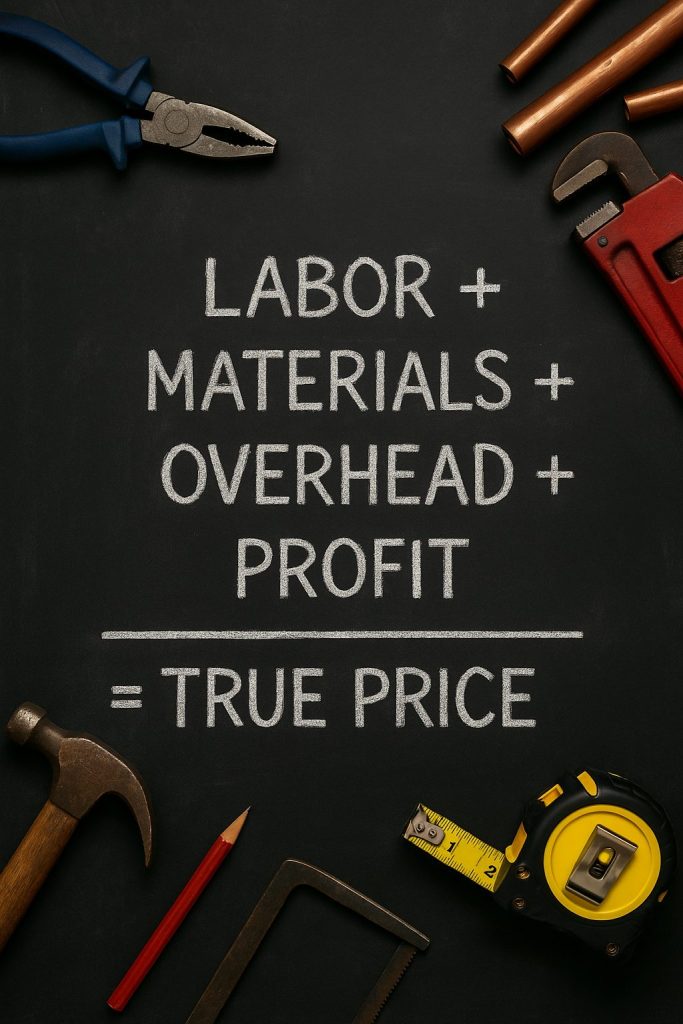
Here’s a simple rule of thumb I use when pricing:
Labor + Materials + Overhead + Profit = Your True Price
Most new contractors forget that “overhead” part — insurance, gas, phone bill, tool replacement — and end up underbidding themselves into exhaustion.
Example:
Let’s say you quote a $1,000 job and spend $700 on materials and labor. If you didn’t factor in overhead or profit, you might think you made $300 — but once you pay for insurance, gas, and taxes, you’ve made almost nothing.
Profit isn’t greed. It’s what keeps your business alive when a job goes sideways.
Tools That Help:
- Jobber or ServiceTitan for scheduling and invoicing
- QuickBooks for bookkeeping
- Google Workspace for simple communication and storage
These tools pay for themselves when used consistently — they save time, reduce errors, and make you look more professional.
Practical Steps: A Simple Startup Framework
If you’re serious about going out on your own, here’s a simple 5-step process to start strong:
- Get Legit:
Register your business, get insurance, and open a separate business bank account. Keep personal and business finances separate from day one. - Start Lean:
Work from your garage, use existing tools, and take on jobs you know you can handle profitably. - Build a Brand of Integrity:
Be on time, communicate clearly, and never cut corners. Your reputation is your marketing. - Track Everything:
Every estimate, every expense, every hour. Knowing your numbers will guide every decision. - Keep Learning:
Business ownership is a trade of its own. Read, ask questions, and learn from those who’ve been there. You’ll avoid costly lessons later.
Starting your own construction trade business is one of the most rewarding — and challenging — moves you’ll ever make. The real costs aren’t just financial. They’re emotional, mental, and physical. But if you’re willing to plan smart, work hard, and keep your integrity front and center, the payoff is worth every late night and early morning.
You’ll build more than a business. You’ll build freedom.