

*This post may contain affiliate links for which I earn commissions.*
Running a one-man shop sounds like freedom — no boss, no middleman, and no one to answer to but your customers. You can choose your jobs, your hours, and your future. But if you’ve been doing it a while, you know the truth: that freedom can quickly turn into chaos if you don’t manage your time right.
I’ve been there. I remember working 10-hour days in the field, then coming home to do estimates, invoices, and paperwork until midnight. The tools were easy — the books were the challenge. When you’re the estimator, scheduler, technician, and bookkeeper, time slips away fast.
This post is for the solo contractors out there who feel like they’re doing it all — because you are. I’ll share some practical lessons I’ve learned over decades in the trades about balancing your field work with the business side, so you can stay productive, profitable, and sane.
1. You’re Not Just a Tradesman — You’re a Business Owner
The first shift you’ve got to make is mental. You’re not just an electrician, plumber, or HVAC tech anymore — you’re running a business. And a business lives or dies by how well you manage both the tools and the books.
When you’re working for someone else, it’s easy — show up, do the work, and go home. But when it’s your name on the van, every minute counts. Time you don’t track, invoices you don’t send, calls you don’t return — those things add up.
Here’s the mindset I live by:
“If I don’t treat my business like a business, no one else will.”
That means blocking off time for paperwork, estimates, and planning just like you do for installs or repairs. Schedule your business tasks — don’t squeeze them in when you’re exhausted.
Example:
If you spend eight hours in the field and two hours on admin, you didn’t work an eight-hour day — you worked ten. Price your jobs and plan your schedule accordingly.
2. Prioritize Your Day with Purpose, Not Panic
When you wear every hat, it’s easy to get caught reacting instead of planning. You wake up, check your messages, and suddenly you’re racing from one “urgent” thing to another. The day ends, and your real priorities — invoicing, marketing, scheduling — are still untouched.
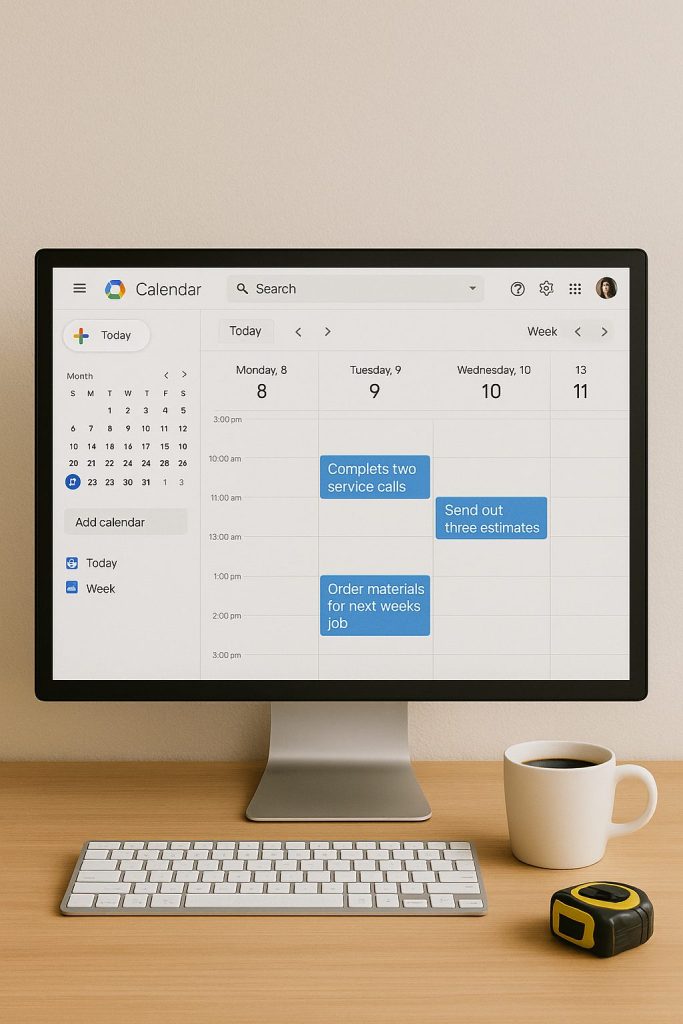
Here’s what helps:
Start each morning with a simple plan. Write down the top three things that will actually move your business forward that day. Not ten. Just three.
Example:
- Complete two service calls
- Send out three estimates
- Order materials for next week’s job
Everything else is secondary.
By focusing on purpose, not panic, you’ll stop spinning your wheels and start gaining traction.
Pro Tip:
Use a simple app like Google Tasks, Trello, or even a paper notebook. The system doesn’t matter — consistency does.
3. Automate and Delegate — Even When You’re Solo
You may not have employees (yet), but that doesn’t mean you have to do everything manually. The smartest one-man shops use tools to save time, reduce errors, and stay organized.
Here are a few worth trying:
- Jobber – Handles scheduling, quotes, and invoicing in one place.
- QuickBooks – Keeps your finances organized and ready for tax season.
- Google Calendar – Blocks your work hours and reminds you of follow-ups.
- Voice-to-text apps – Dictate notes, material lists, or reminders on the go.
Even better, automate small but repetitive tasks:
- Use invoice templates.
- Set payment reminders.
- Automate appointment confirmations by text or email.
It’s not about working harder — it’s about building systems that work with you.
Example:
I used to lose an hour every night handwriting estimates. When I switched to Jobber, I could send one before leaving the driveway. That single change freed up nearly five hours a week.
4. Protect Your “Business Time” Like a Job Site
Most one-man contractors make the mistake of treating paperwork like something they’ll “get to later.” But later never comes. To fix this, you’ve got to treat your admin time with the same discipline as your field work.
Try this framework:
- Mornings: Quick prep, review the day’s jobs, and check messages.
- Afternoons: On the tools — do your field work.
- Evenings (1 hour max): Send invoices, follow up with clients, update your books.
If possible, reserve one half-day each week as your “office day.” Use it to handle billing, order supplies, and plan ahead. Your future self will thank you.
Pro Tip:
Don’t take calls during your focused “book time.” Set your phone to “Do Not Disturb” or use a voicemail script like:
“I’m on a job right now but will return your call after 4 p.m. I appreciate your patience.”
You’ll come across as professional — not unavailable.
Practical Framework: The 3×3 Time Management Rule
Here’s a simple structure I’ve taught other contractors that keeps everything balanced:
- 3 Priorities per Day:
Choose the three most important things that must get done — whether that’s finishing a job, sending invoices, or calling back leads. - 3 Hours per Week for Business Admin:
Dedicate at least three solid hours a week to paperwork, planning, and numbers. That’s your “shop maintenance” time. - 3 Tools to Automate Routine Tasks:
Pick three apps or systems to simplify your workflow — like scheduling, billing, or tracking mileage. Master them before adding more.
This keeps your schedule simple, realistic, and focused. You’re not trying to do everything — just the right things.
Being a one-man contractor is a badge of honor. You’re the worker, the boss, and the bookkeeper — all in one. But if you don’t manage your time, your business will end up managing you.
Remember this: the time you spend on your business is just as valuable as the time you spend in it. Every estimate you send, every system you build, and every bit of organization adds stability and peace of mind.
Balance doesn’t happen by accident — it happens by discipline.
And once you find that rhythm, you’ll see your business grow faster, your stress drop, and your evenings finally start to feel like your own again.
If this helped you, check out my related post:
“How to Price Your Work Without Undervaluing Yourself.“